

25–28 August 2026
ESA 2026
Our partners from Vytautas Magnus University participated at the 17th European Sociological Association (ESA) conference with topic Strengthening Democracies: Social Action, Solidarity, and Sustainable Futures.
The conference took place in Warsaw, Poland, between 25th and 28th August 2026.
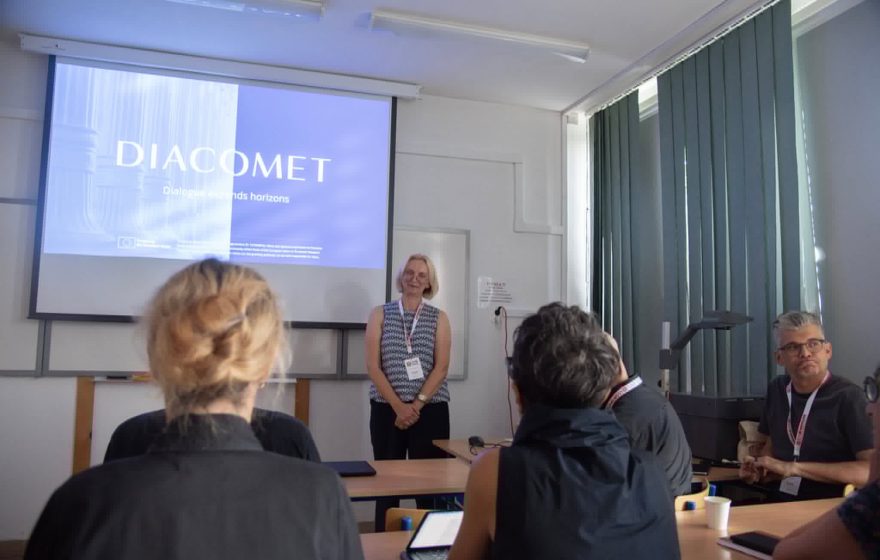
Our representative Kristina Juraite presented DIACOMET related results in her presentation, titled Reflecting on Dialogic Ethics in the Era of Communicative AI.
Abstract: The rise of AI systems, particularly large language models, raises critical questions of how the nature of social interaction and discursive practices are changing through digital technologies. DIACOMET project research carried out in eight European countries reveals growing societal concern about the influence of digital platforms and algorithmic technologies of AI in public communication and everyday life, including algorithmic biases, hallucination, disinformation, discrimination and privacy breaches. AI-mediated communication indeed suggests new experiences for social relationships and brings relational perspective at the forefront of the discussion (Esposito, 2022; Bailenson et al., 2004). Drawn on a longstanding tradition of dialogic scholarship and ethical communication, dialogic ethics approach can elevate the quality of digital spaces and experiences by promoting more knowledgeable, responsible and ethically sound use of AI (OECD, 2025; Torkamaan et als., 2024; Beranger, 2021; Rugge, 2020; Walz, 2017). Genuine human dialogue is understood here as an open, responsive and continual negotiation of meaning through the interpersonal interaction of multiple voices and perspectives (Rose-Redwood, 2018; Baxter, 2004). Empathy practiced and developed through real-life social interactions is of key dimension to dialogic engagement (Kent & Taylor, 2021). Yet, hybrid human-and-AI-driven interactions pose a risk of eroding human ability to be emotionally present and aware of the other. In response to the accelerating arrival and influence of new digital spaces, capacity-building in knowledgeable and ethically sound use of AI systems is essential to safely navigate the risks and unlock emerging opportunities in a thoughtful and careful way. Hence, in a digital society, AI literacy and explicit training on ethical and responsible use of AI dialogue systems should be seen as an integral part of lifelong learning journey. In the paper, findings from empirical research on the ways to promote AI ethics and AI literacy will be presented.